
Wound Care Compounding
Wounds can be complex, uncomfortable, and difficult to manage with standard products alone. At Healthway Compounding Pharmacy, we work with healthcare providers throughout Michigan to prepare customized wound care medications based on each patient’s specific needs, wound type, sensitivities, and treatment plan.
Compounded wound care medications may be helpful when a patient needs a specific combination of ingredients, a customized strength, an alternate dosage form, or a preparation that is not commercially available. Our pharmacy team prepares each medication according to the provider’s prescription to support individualized wound care.
All compounded medications require a valid prescription from a licensed healthcare provider.
A Compounding Pharmacy’s Role in Wound Care
Wound care often requires more than a one-size-fits-all approach. Some wounds need ongoing management, while others require targeted support for discomfort, moisture balance, odor, irritation, or infection risk.
Healthway Compounding Pharmacy provides tailored wound care solutions by preparing personalized formulations that align with the provider’s care plan. These customized medications may be especially useful for complex wounds, difficult-to-manage wounds, or situations where a commercial product does not meet the patient’s needs.
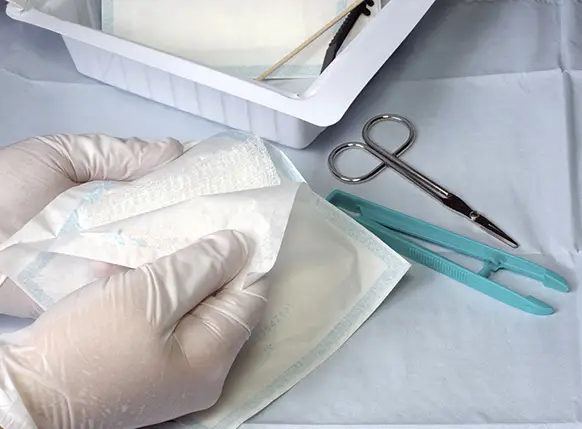
Understanding Different Types of Wounds
Wounds can range from minor skin injuries to more serious wounds that require specialized medical attention. Proper wound management is important to reduce complications, support patient comfort, and help maintain a healthier skin environment.
Common wound types may include:
Acute wounds
Cuts, scrapes, punctures, or other injuries that typically heal within a shorter period when properly managed.
Chronic wounds
Wounds such as diabetic ulcers, pressure ulcers, or venous stasis ulcers that may require ongoing care.
Surgical wounds
Incisions or donor sites related to medical procedures that need careful management.
Burns
Skin injuries that may require customized topical support depending on severity, location, and provider recommendations.
Because each wound has different needs, compounded medications can give providers more flexibility when developing a patient-specific treatment plan.
Compounding for Ulcerations
Ulcerations are chronic wounds that can develop due to poor circulation, prolonged pressure, diabetes, or other underlying conditions. These wounds often require careful monitoring and individualized care.
Common types of ulcerations include:
- Diabetic ulcers
- Pressure ulcers, also known as bedsores
- Venous stasis ulcers
For ulcerations, a provider may prescribe compounded formulations such as topical antibiotics, hydrating gels, pain-relieving creams, or combination preparations. These formulations can be customized based on the wound location, patient tolerance, and treatment goals.
Burn Care Support
Burns can vary widely in severity and should always be evaluated by a healthcare provider when medical care is needed. For certain burns, compounded topical medications may be prescribed to help support comfort, moisture, and skin protection.
Compounded burn care preparations may include:
- Moisturizing creams
- Antibacterial ointments
- Cooling gels
- Topical preparations for localized discomfort
- Custom formulations for sensitive or irritated skin
By allowing customization, compounding can help providers choose a preparation that fits the patient’s needs and the location of the burn.
Donor Site Care
Donor sites, where skin has been removed for grafting, often require specialized care. These areas can be sensitive, uncomfortable, and prone to irritation. Compounded medications may be used as part of a provider’s plan to help manage discomfort, protect the skin, and support proper wound care.
Examples of compounded donor site preparations may include topical pain-relieving formulations, antimicrobial solutions, and moisturizing agents.
Odor Control for Chronic Wounds
Certain wounds, especially chronic or infected wounds, may produce odor that affects a patient’s comfort, confidence, and quality of life. When appropriate, providers may prescribe compounded formulations designed to help manage wound odor while remaining gentle on surrounding skin.
Odor-control formulations may include:
- Antimicrobial powders or gels
- Activated charcoal preparations
- Custom deodorizing creams
- Gentle topical formulations for sensitive skin
These options can help support dignity and comfort as part of an ongoing wound care plan.
Skin Irritation and Barrier Support
Bandages, adhesives, drainage, friction, and repeated wound care product use can irritate the skin around a wound. This irritation may make wound care more uncomfortable and can complicate the management process.
Compounded preparations may be used to support the surrounding skin with:
- Barrier creams
- Anti-inflammatory ointments
- Custom moisturizers
- Protective topical formulations
- Preparations made without certain inactive ingredients when appropriate
These customized options can be especially helpful for patients with sensitive skin or irritation around the wound area.
Examples of Compounded Medications for Wound Care
Healthway Compounding Pharmacy can prepare a variety of wound care formulations as prescribed by a healthcare provider. Examples may include:
- Antibacterial ointments
- Antifungal ointments
- Hydrogels to help maintain a moist wound environment
- Topical anesthetics for localized discomfort
- Combination creams with multiple prescribed ingredients
- Deodorizing powders
- Barrier creams
- Moisturizing agents
- Protective medicated coatings
- Custom topical gels, creams, ointments, or solutions
For specific formulations, ask our pharmacists. We can work with providers to determine whether a compounded option may be appropriate for a patient’s wound care needs.
Contact Healthway About Wound Care Compounding
Healthway Compounding Pharmacy is proud to support patients and providers throughout Michigan with customized compounded medications for wound care. Our team understands that wound care can be complicated, especially when patients are dealing with chronic wounds, irritation, odor, discomfort, or sensitive skin.
We prepare each compounded prescription with attention to quality, accuracy, and the specific instructions provided by the prescriber.
If you are a patient managing a wound or a provider looking for customized wound care options, Healthway Compounding Pharmacy can help. Contact our team to discuss prescription requirements, available dosage forms, and how compounded medications may support individualized wound care plans.
Frequently Asked Questions
Can Healthway recommend a wound care treatment for me?
Patients should work with their healthcare provider to evaluate the wound and decide whether a compounded medication is appropriate. Our pharmacists can consult with the provider to help determine an appropriate prescription for a patient’s specific need.
When might a provider choose a compounded wound care medication?
A provider may choose a compounded wound care medication when a patient needs a customized strength, a specific combination of ingredients, an alternate dosage form, or a preparation that is not commercially available.
Can compounded wound care medications be made for sensitive skin?
In some cases, yes. Depending on the prescription and formulation, compounded medications may be prepared without certain inactive ingredients or with a base selected for sensitive or irritated skin.
Are compounded wound care medications only for chronic wounds?
No. Compounded medications may be used for a variety of wound care needs, including chronic wounds, surgical wounds, burns, donor sites, skin irritation, and localized discomfort, depending on the provider’s treatment plan.
Are compounded wound care medications only for chronic wounds?
No. Compounded medications may be used for a variety of wound care needs, including chronic wounds, surgical wounds, burns, donor sites, skin irritation, and localized discomfort, depending on the provider’s treatment plan.
Can providers request a specific wound care formulation?
Yes. Providers may contact Healthway Compounding Pharmacy to discuss specific formulation needs, dosage forms, ingredient combinations, or patient-specific concerns.